IMEI vs Serial Number: What’s the Difference?
Learn the difference between an IMEI number and a serial number, what each one is used for, and how they help identify mobile devices.
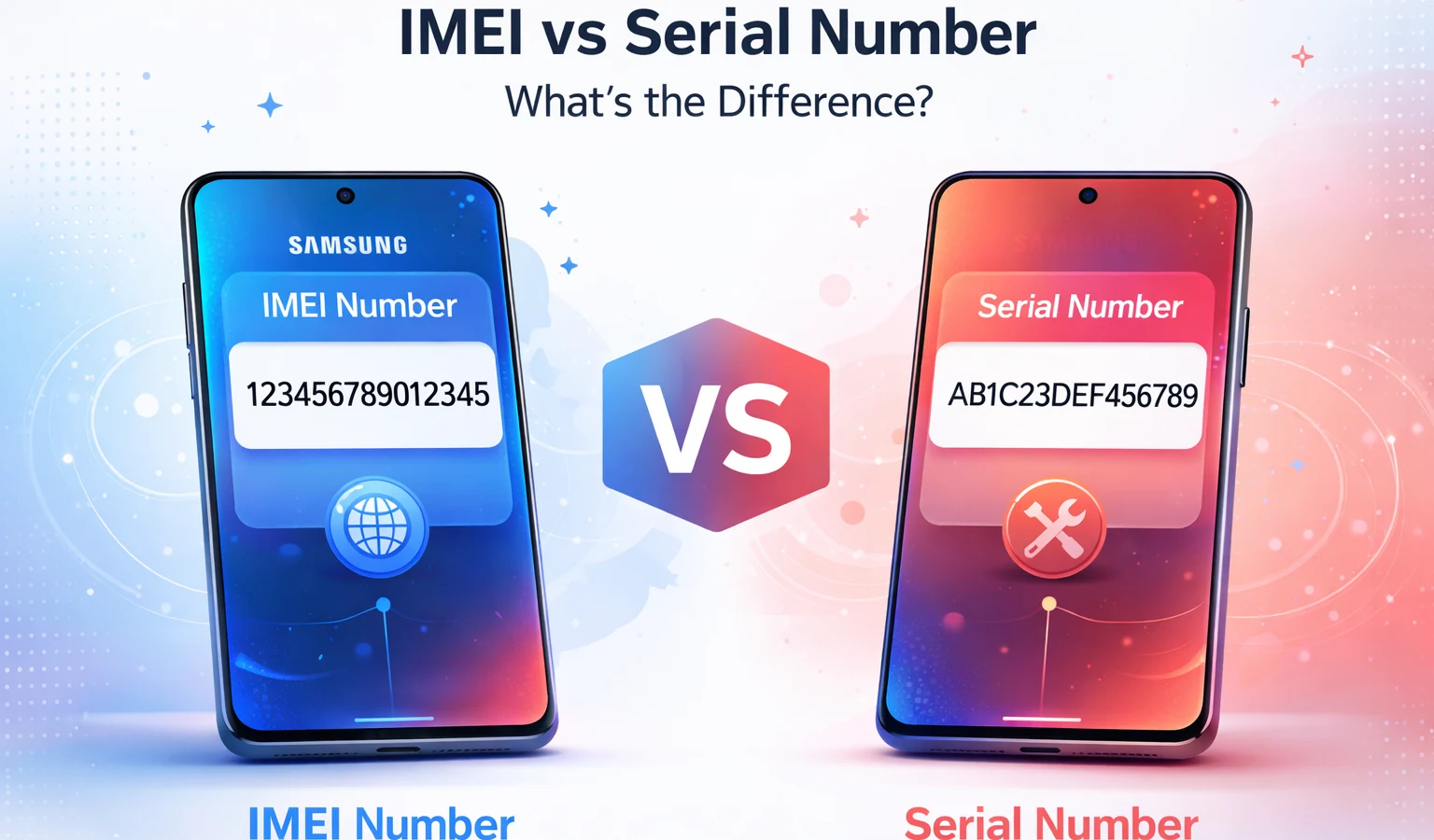
IMEI vs Serial Number: What’s the Difference?
When checking a phone, you may see two different identifiers: the IMEI number and the serial number.
Many people think they are the same, but they are not.
Both numbers are used to identify a device, but they serve different purposes. Understanding the difference can help you verify a phone before buying, selling, or requesting support.
What Is an IMEI Number?
IMEI stands for International Mobile Equipment Identity.
It is a unique 15-digit number assigned to a mobile device. Carriers use the IMEI to identify phones on their networks.
An IMEI is commonly used for:
- Checking blacklist status
- Verifying carrier lock status
- Identifying the phone model
- Tracking a lost or stolen device through carrier systems
The IMEI is especially important when buying a used phone.
What Is a Serial Number?
A serial number is another unique code assigned by the manufacturer.
Unlike the IMEI, the serial number is mainly used by the brand for:
- Warranty verification
- Repair tracking
- Internal product identification
- Support requests
Apple, Samsung, and other manufacturers often ask for the serial number when checking warranty or service status.
IMEI vs Serial Number: Main Difference
The main difference is simple:
- IMEI is mainly used by mobile carriers and network systems
- Serial number is mainly used by the manufacturer
In other words:
- The IMEI identifies the phone on cellular networks
- The serial number identifies the device in the brand’s internal system
When Should You Use the IMEI?
You should use the IMEI when you want to:
- Check if a phone is blacklisted
- Verify if a device is carrier locked
- Confirm phone model details
- Check if a used phone is safe to buy
👉 Run an IMEI check on IMEIFAST
When Should You Use the Serial Number?
You should use the serial number when you want to:
- Check warranty information
- Contact the manufacturer for support
- Verify repair or replacement history
- Confirm the device in official brand systems
Can Two Phones Have the Same IMEI or Serial Number?
No. Both identifiers are meant to be unique to each device.
A legitimate phone should have its own IMEI and its own serial number.
If these numbers appear altered or do not match the device details, that can be a warning sign.
Where to Find IMEI and Serial Number
You can usually find both in these places:
In phone settings
Go to:
Settings → About Phone
By dialing the IMEI code
Dial:
*#06#
This usually shows the IMEI.
On the device box
Many phones have the IMEI and serial number printed on the retail box label.
Which One Is More Important When Buying a Used Phone?
If you are buying a used phone, the IMEI is usually more important.
That is because the IMEI can help you check whether the phone is:
- Blacklisted
- Reported lost or stolen
- Locked to a carrier
The serial number is useful too, but the IMEI gives you more protection before purchase.
The IMEI number and serial number are both important, but they are used for different things.
The IMEI helps identify the phone on carrier networks, while the serial number is mainly used by the manufacturer for warranty and support.
If you are checking a used phone before buying, start with the IMEI.
Continue with related IMEI guides
Explore practical checks and verification guides before buying or selling a used phone.
Run a quick device screening before buying or selling a used phone.
Find out whether a phone may have been reported lost, stolen, or blocked.
Verify whether a phone is restricted to a specific mobile network.
Read the step-by-step guide to verify a phone safely before paying a seller.
More from our blog
Continue reading more IMEI, blacklist, carrier, and used phone guides.
A technical breakdown of why factory-unlocked eSIM-only phones encounter 'IMEI Not Supported' errors on MVNOs, exploring the 3-Gate framework, host network whitelisting, TAC checks, and regulatory context.
New to eSIM? This beginner-friendly guide explains what an eSIM is, how it works, its advantages and disadvantages, and why travelers are switching to eSIM technology.
Not sure if your iPhone is locked to a carrier? This quick guide shows you how to check directly in your settings and understand what the results mean.
Your IMEI check says clean but your phone still doesn’t work? Learn the real reasons and what you can do before buying or using a device.